Home / Accessories / Electric Air Pump
Accessory — Inflation system
20 PSI Rechargeable Electric Air Pump
Every tent on this site stands up by air, so the pump is not an accessory in the decorative sense — it is the catalogue's listed inflation tool. This rechargeable high-flow pump is listed at a maximum pressure of 20 PSI with an airflow of 400 L/min, a digital set-pressure function that stops automatically at the target, and a hand-carried format that travels with the tent. Set the Skiff's 6–7 PSI working pressure, start the pump, and walk away to fit the ladder.
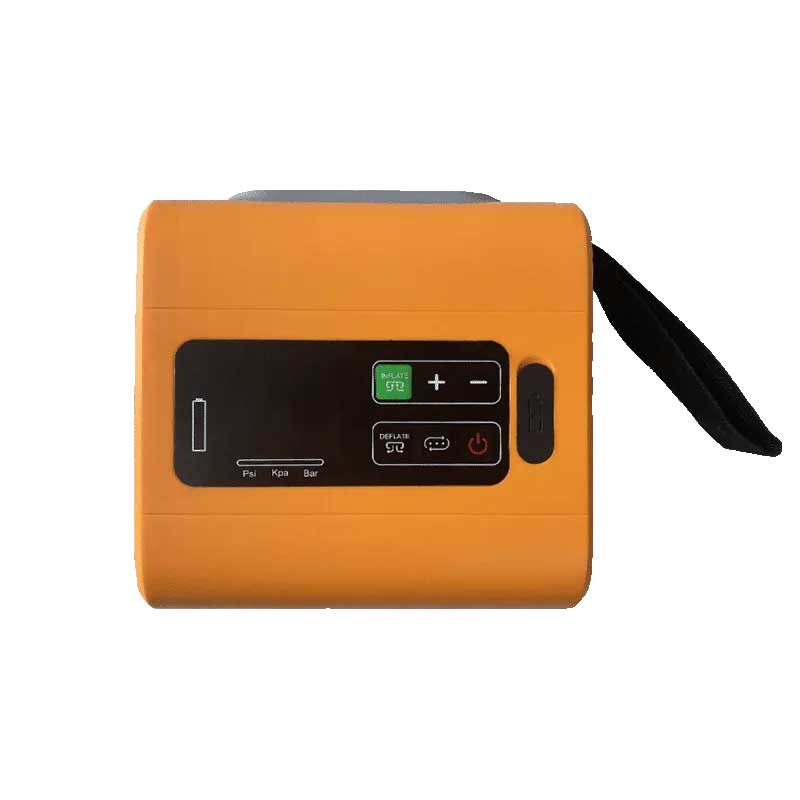
| Type | Rechargeable, high-flow |
|---|---|
| Maximum pressure | 20 PSI |
| Airflow | 400 L/min |
| Control | Digital set-pressure, automatic stop |
| Format | Hand-carried |
Why the specification pair matters
Pumps fail tent owners in two opposite ways: high pressure with no airflow takes forever on a large air mattress, and high airflow with no pressure cannot finish a drop-stitch mattress or bring an air beam to its working range. The listed pairing — 400 L/min for volume, 20 PSI for finish — covers both halves of inflating a roof tent, and the automatic stop at a digitally set pressure removes the guesswork that leads to under-inflated beams (floppy tent) or over-inflated ones (stressed seams). For a fleet operator pitching several tents a day, set-pressure inflation is also a training tool: the operator sets each model's own target pressure once, and the pump stops there on its own. The target itself is a per-model figure — only the Skiff's 6–7 PSI is published — so confirm the working pressure and valve fit of each model in the enquiry.
One pump, listed in the catalogue
This is the one pump the catalogue lists, and it is presented across the inflatable roof top tents, the inflatable ground tents and accessories such as the tent airbag and the inflatable table and chair set in the awnings and accessories range. Fit, though, is a per-model question of working pressure and valve: the only working pressure published in the range is the Skiff's 6–7 PSI, so confirm the pressure and nozzle fit for your model in the enquiry before treating one pump as the whole fleet's tool. The Solo lists an electric pump inside its own package; for other models, confirm whether the pump is included in the configuration you are ordering or priced as an add-on, and consider ordering spare pumps at fleet scale — a rental operation with tents out and no working pump has no product.
Care and compatibility
A rechargeable pump lives in the tent bag, so treat it as part of the tent system: charge it after trips rather than before them, and keep the nozzles with the pump rather than loose in the vehicle. Nozzle and valve fit is not published model by model, so have it confirmed in writing with your order — the advantage of sourcing the pump from the tent supplier instead of a general marketplace is that the question is answered against the same product files as the tents themselves. Confirm the nozzle set included with the pump when you place a fleet order.
Ordering notes
Accessory minimum order quantities on the company's listings sit in the 20–50 piece band for the accessory line. Ask for the pump's MOQ, the bundle pricing with tent orders and the lead time when you enquire, and confirm before payment.
- What pressure do the tents need?
- The Skiff's working pressure is 6–7 PSI; the pump's 20 PSI maximum covers it with headroom, and automatic stop prevents overshooting the set point.
- How fast is it?
- Airflow is listed at 400 L/min. Actual pitch time depends on tent volume; the pump is the high-flow option in the range, ahead of the hand pumps listed in several tent packages (Skiff, Castle, Osprey and Solo among them).
- Is it rechargeable?
- Yes — it is a rechargeable, hand-carried unit, so it does not depend on the vehicle's battery at the pitch.