Home / Inflatable Roof Top Tents / Solo
Specimen 07 — One person
Solo 1-Person Inflatable Roof Top Tent
The Solo takes the inflatable concept down to its minimum useful size: one person, a 90 cm wide tent, and a main tent weight of 8.4 kg (18.5 lb). That is light enough to mount alone and to carry to a ground pitch when the vehicle cannot reach the campsite. Whether it suits a small car is not settled by the 8.4 kg alone: run the driving sum — tent plus rack and any roof accessories — against that car's dynamic rating, and check the parked sum separately. The mattress is a full 25 cm (9.8 in) air mattress — the same thickness as the Skiff's, and the thickest published mattress figure in the line — because a solo camper notices the bed more than anything else.
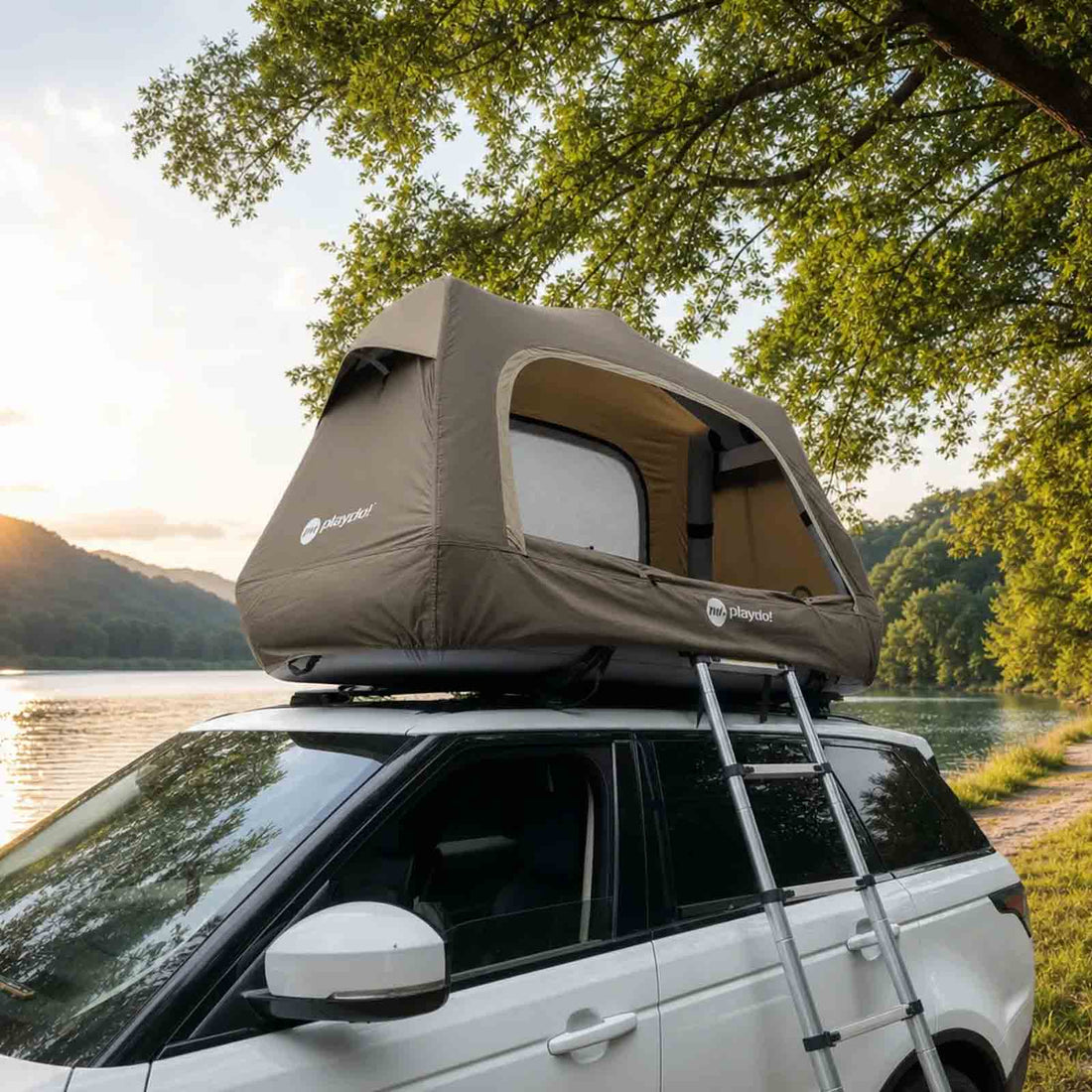
| Capacity | 1 person |
|---|---|
| Main tent weight | 8.4 kg (18.5 lb) |
| Design width | 90 cm |
| Air mattress | 25 cm (9.8 in) |
| Included | Ladder · electric pump · manual pump |
| Ventilation | Mesh openings + two vents |
| Detail | Concealed light strip |
Figures above are from the model's published product description. If your procurement file needs a full dimensional table, request the current spec sheet with your enquiry.
Why one person is a category, not a compromise
Most roof top tents are sold as two-person products and used by one person carrying a partner's worth of weight and width. The Solo is designed the other way: a 90 cm bed is wide for one sleeper, the 8.4 kg tent halves the lifting and fuel penalty of a two-person inflatable, and the narrow footprint leaves roof space beside the tent for a kayak, a cargo box or the inflatable soft roof rack from the same catalogue. For motorcycle-trailer campers, solo overlanders and fishing or photography trips where the camp is a base for one, it is the rational default in this range. Our lightest roof top tents guide shows how far 8.4 kg is from the rest of the field.
Details that matter at 2 a.m.
The concealed light strip is a small thing until you are looking for a zipper pull in the dark; the mesh openings and two vents keep a small air volume from feeling close; and because the package includes both the electric pump and a manual pump, a flat vehicle battery does not cancel the night's camp. The ladder is included as well, so the listed package is a complete one-person system rather than a tent that needs accessories before its first trip.
Roof space, shared
A 90 cm tent leaves physical room beside it on a wider roof, and that space is worth planning for: a kayak on a second rail, a slim cargo box, or the inflatable PVC soft roof rack listed in the same catalogue — itself rated at 100 kg capacity and fitted by straps without drilling. Treat that as a layout possibility to verify, not a rated combination: any cargo sharing the roof joins the driving sum in the roof load guide, and the parked sum still has to pass. Run both checks for the exact vehicle before presenting the Solo as a system choice — tent plus neighbouring cargo that stays inside both ratings is a genuinely different offer from a full-width tent, and for anglers, photographers and solo tourers it can be the purchase reason, provided the combined load checks pass. On published widths, the Solo leaves more of the roof free than any other model in the range.
Ordering notes
Ask for the Solo's minimum order quantity, the complete specification sheet and the lead time when you enquire, and confirm them before payment. Retailers should note the Solo is the lightest published model in the inflatable range, and the one that most simply demonstrates the weight argument for inflatable construction — the natural model to show a customer who is new to roof tents.
- How much does the Solo weigh?
- The main tent is listed at 8.4 kg (18.5 lb) — the lightest published roof top tent weight in this catalogue.
- Is a pump included?
- Yes — both an electric pump and a manual pump are listed in the package, along with the ladder.
- How wide is the bed?
- The design width is 90 cm, with a 25 cm thick air mattress.